Practical Life · 6–12 yrs · 4 min read
Growing Independence in the Elementary Years
Meaningful responsibilities, shared planning and time to reflect help older children take ownership of everyday life.
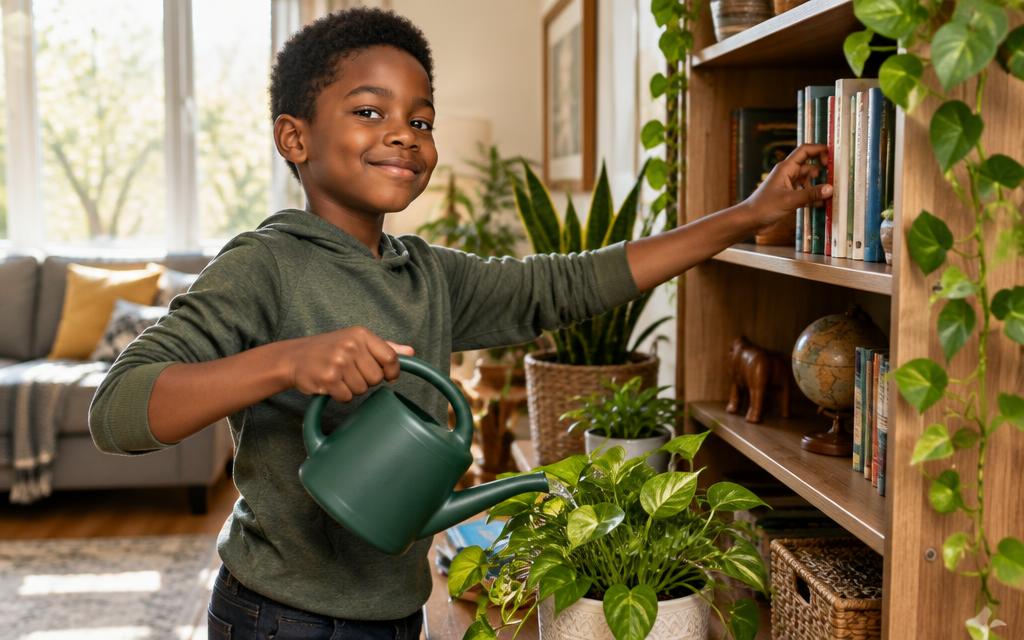
Responsibility with real purpose
Children aged six to twelve often want to contribute beyond their own needs. Invite your child to choose a useful family task: planning a simple meal, caring for plants or organising a shared bookshelf. Start with something manageable rather than a long list of chores.
Plan together, then step back
Ask what the task needs, which steps come first and what help would be useful. Write or draw a short plan together. Demonstrate unfamiliar tools and agree on safety boundaries, then allow your child to work without correcting every small detail.
Let practical work connect to learning
A meal can lead to reading a recipe, measuring ingredients, comparing prices and learning where food grows. Let these connections follow your child's questions rather than turning every task into a test. An adult should supervise heat, sharp tools and other hazards.
Reflect without rewards or rankings
Afterwards, ask: 'What worked?' and 'What would you change next time?' Notice specific effort and useful contributions. If a task feels overwhelming, make the next step smaller. Independence grows through supported practice, not through withdrawing help.